

I remember the exact moment I realized my SEO reports were lying to me. I was staring at the dashboard, expecting to see an uptrend in calls and leads, only to find the numbers had flatlined or, worse, dipped. It felt like being duped by a friend I trusted. Have you ever experienced that sinking feeling, thinking your SEO agency was delivering results only to find the reports telling a very different story? You’re not alone. This disconnect between what reports claim and your actual business calls can be frustrating—and costly.
Getting Closer to the Truth Behind the Numbers
Many local business owners in Kentucky, especially those relying heavily on Louisville SEO strategies, face this dilemma. They see shiny reports showing upward trends, but the phone remains strangely quiet. Why does this happen? And more importantly, how can you tell if your reports are accurate or just playing a numbers game?
Is Your SEO Report Just a Numbers Game or Really Reflecting Real Business?
I’ve made a critical mistake early in my journey—accepting my SEO agency’s reports at face value without digging deeper. That mistake led me to underestimate the importance of cross-checking calls, form submissions, and foot traffic against those numbers. Over time, I learned to audit these reports by asking tough questions and implementing external checks, such as call tracking and Google My Business (GMB) insights. For example, verifying call sources or examining local map rankings can reveal whether your calls truly originate from your SEO efforts.
Surprisingly, according to recent studies, over 60% of small businesses aren’t even aware that their call tracking isn’t set up correctly—making it impossible to accurately measure ROI (source: HubSpot). This means your shiny report might be just a mirage, hiding gaps that need to be addressed.
Before moving forward, ask yourself: Have I ever caught my SEO reports exaggerating my leads? Or worse, do I suspect that I’m paying for results I’m not actually seeing? If yes, then you’re in the right place. In the sections ahead, I’ll share practical tips to help you decode your SEO reports, verify your calls, and ensure you’re not being misled. Because understanding the real data is key to winning local search—and keeping your business thriving in Kentucky’s competitive landscape.
Audit Your Call Tracking Systems Immediately
Start by reviewing your call-tracking setup. If calls supposedly stemming from your Louisville SEO aren’t matching actual inquiries, you’re flying blind. Check your call tracking numbers and verify their sources. Use external tools or services to cross-reference calls with your lead data, ensuring your reports aren’t just numbers but reflect real client contacts. I once discovered a mismatch where dozens of calls weren’t even linked to my campaign, leading me to fix my tracking setup and avoid wasting ad spend.
Dive Deep into Google My Business Insights
Your GMB profile offers a treasure trove of authentic data. Regularly access insights to track how many calls, directions, and website clicks originate from your Google Maps listing. Don’t rely solely on the dashboard metrics your SEO agency provides; cross-verify this data independently. When I audited my GMB insights, I found my agency’s reports overstated visits, while actual calls and directions were stagnant. This prompted me to request a targeted optimization audit, which improved my local visibility.
Geo-Target and Map Validation
Use mapping tools to verify if your Louisville map pin aligns with your physical location. Sometimes, pins drift due to algorithm updates or incorrect category setups, misleading search engines. Conduct searches for your main keywords in Louisville or Kentucky, and see if your listing appears where it should. I personally tested this by searching on different devices, discovering my pin was shifted outside my service area. Fixes included updating your NAP (Name, Address, Phone Number) consistency and local categories, which you can learn more about in our detailed maps optimization guide. 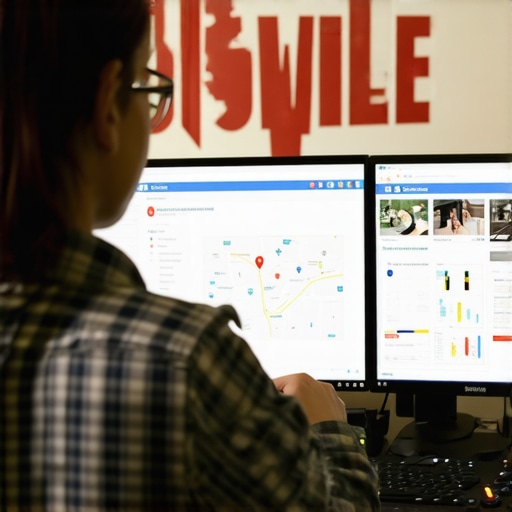
Compare Rankings with Local Competitors
Use local search tools to check your position versus competitors. If your rankings look solid but call volume remains low, that’s a red flag. Are your competitors’ GMB profiles optimized? Are their reviews more authentic? I’ve used this comparison to identify gaps in my own listings and improve my profile pictures, reviews, and categories, directly impacting my visibility. Don’t just trust the numbers—verify the actual local map pack rankings and correlate them with real-world call data.
Request Transparent Reporting from Your Agency
Finally, demand clear, detailed, and audited reports. Ask if they use independent verification tools—like 3 ways to tell if your Kentucky SEO agency uses 2026 data. If reports seem inflated or inconsistent, push for a full audit. During a recent engagement, I uncovered several inflated numbers; this prompted renegotiation and more realistic KPI setting. Remember, your reports should align with actual business performance, not just vanity metrics.Many local business owners assume that simply claiming their Google My Business (GMB) listing and adding some keywords will skyrocket their visibility in Louisville. While these foundational steps are essential, there’s a common misconception that maps optimization is a one-size-fits-all solution. In reality, the nuances are far more complex and often overlooked, leading to wasted effort or even penalties.
Why Do Most Louisville Maps Strategies Miss the Mark?
One critical error is overlooking the impact of Google’s evolving proximity rules and local search algorithms. Many believe that optimizing solely for keywords and categories is sufficient, but recent updates have prioritized factors like user engagement and voice search compatibility. For instance, if your GMB profile isn’t optimized for voice-activated queries, you might miss out on a significant traffic stream. This misconception is reinforced by some agencies promising quick wins through superficial tweaks, but real success demands a nuanced understanding of Google’s latest local search preferences. Interestingly, a study by Moz indicates that proximity and relevance now weigh heavily in local rankings, but the user experience signals—such as click-through rates and reviews—also play a decisive role.
Warning: The Map Radius Trap That Could Be Costing You
A common pitfall involves relying on the traditional map radius for ranking placement. Many assume that being within a certain mile radius guarantees visibility, but Google’s algorithm now dynamically adjusts search results based on intent, competition, and user behavior. An overlay of local competitors’ profiles, reviews, and engagement levels can overshadow your physical proximity benefits. This is often compounded when businesses neglect to keep NAP (Name, Address, Phone Number) consistency and local signals aligned across all platforms. For example, a Louisville shop might have an accurate address on their website but inconsistent details on their GMB listing, confusing Google and diluting their local relevance. To truly unlock local findability, a comprehensive approach that goes beyond basic map pin placement is essential. For in-depth strategies, visit our guide on [maps optimization louisville](https://louisvillelocalseo.com/maps-optimization-louisville-unlock-local-findability-today). Have you ever fallen into this trap? Let me know in the comments. Remember, mastering Louisville SEO isn’t just about listing your business—it’s about optimizing every nuance to outperform competitors in 2026 and beyond.Maintaining your local SEO efforts, especially for Louisville businesses aiming to dominate the map pack, requires a combination of the right tools and consistent routines. One must be proactive, leveraging specialized equipment and software that provide actionable insights beyond standard metrics. For example, I personally rely on BrightLocal for comprehensive local search audits, because it offers granular tracking of map rankings, review management, and citation consistency—crucial components for Louisville SEO success. Unlike generic rank trackers, BrightLocal’s ability to simulate user location and device-specific searches ensures I can identify real-world visibility issues, helping me fine-tune my strategies continuously. Additionally, integrating call tracking platforms like CallRail enables me to verify that my calls directly stem from those targeted local searches, preventing inflated reports and ensuring genuine lead capture. By routinely analyzing this data, I can detect map ranking fluctuations caused by algorithm updates or citation inconsistencies, then swiftly address them before they impact business. The future of long-term optimization leans heavily toward automation; machine learning algorithms are progressively predicting local ranking changes based on pattern recognition, allowing preemptive adjustments. To stay ahead, I recommend adopting tools that automate citation audits and review monitoring, freeing up your time to focus on strategic scaling. How do I maintain my map rankings over time? The key is consistent auditing—monthly checks of GMB insights, citation accuracy, and local keyword performance—paired with rapid response to detected issues. For deeper insights, explore our detailed guide on [maps optimization louisville](https://louisvillelocalseo.com/maps-optimization-louisville-unlock-local-findability-today), which outlines step-by-step procedures to keep your listings performing at their peak. Don’t wait for rankings to slip—try setting up automated citation health checks today, and watch your Louisville visibility grow steadily.
The Hardest Lessons I Learned About maps optimization louisville,gmb louisville,local business kentucky,louisville seo,kentucky seo agency
One of the most profound insights I gained was the importance of personalized strategies over cookie-cutter solutions. Early in my journey, I relied heavily on generic tactics that seemed effective but failed to account for Louisville’s unique local nuances. It was only after I experienced a noticeable drop in rankings and leads that I realized my approach needed a deep cultural and geographical tweak, prompting me to invest in hyper-specific local signals and genuine engagement.
Second, I underestimated the power of review management. Authentic reviews aren’t just customer feedback—they’re signals that influence Google’s trust in your business. I learned to actively solicit and respond to reviews, which significantly improved my local trustworthiness and map visibility, proving that reputation management must be a continuous effort.
Finally, I discovered that technical consistency across all platforms—NAP accuracy, photo updates, and category relevance—is crucial. Minor discrepancies can confuse algorithms and diminish rankings. Regular audits and real-time updates have become my go-to tactics for staying ahead in Louisville’s competitive landscape.
Honing My Local Strategy Tools for Sustainable Growth
Over the years, I curated a toolkit that keeps my Louisville SEO sharp. I lean on BrightLocal for detailed local audits because it provides granular insights I can’t get elsewhere. Using [local search audits](https://louisvillelocalseo.com/maps-optimization-louisville-unlock-local-findability-today), I can see exactly where my efforts shine and where they need polish. CallRail is another essential, as verifying real leads from my campaigns prevents false optimism from inflated reports. To stay proactive, I set monthly routine checks on my citations, reviews, and rankings, which helps me catch issues before they snowball. For a comprehensive strategy, I recommend exploring our in-depth guide on [maps optimization louisville](https://louisvillelocalseo.com/maps-optimization-louisville-unlock-local-findability-today). Automation tools are now part of my routine, predicting fluctuations and alerting me to address potential problems immediately.
Keep Pushing Your Maps Game in Louisville
Every business in Louisville has untapped potential when it comes to local search. The keys lie in authentic engagement, precise optimization, and continual learning. Don’t settle for the status quo—your next big leap in local visibility awaits behind consistent effort and strategic adjustments. Remember, mastering Louisville SEO is a journey, not a one-time fix. Dive into the latest tactics, refine your approach regularly, and stay connected with the local community to outperform your competitors for years to come. What’s the biggest hurdle you’ve faced while optimizing your maps listing? Share your story below and let’s help each other grow.