
4 Local Business SEO Kentucky Mistakes Killing Your 2026 Leads

I remember the exact moment I realized my local business was invisible online. It was a busy Saturday afternoon, and I was desperately trying to find my own storefront on Google Maps—only to discover my listing was buried beneath competitors, overshadowed by fake reviews and outdated info. That lightbulb moment hit hard. If I hadn’t caught those local SEO mistakes early, I might have watched my leads vanish just when I needed them most.
Why Ignoring Local SEO Can Doom Your Business in 2026
In today’s hyper-competitive Kentucky market, just having a website isn’t enough. Our customers rely heavily on local searches—think “Kentucky SEO agency near me” or “Louisville shops open now.” But if you make common mistakes with your Google My Business (GMB) profile or maps optimization, you might end up invisible when it counts. Remember, a study from BrightLocal indicates 78% of local mobile searches lead to offline purchases. That’s a huge deal. Missing out means losing potential customers—sometimes to competitors who got their local SEO right.
Is Local Maps Optimization Overhyped?
Early in my journey, I made the mistake of thinking that just claiming a GMB profile was enough. I ignored vital signals like consistent NAP (Name, Address, Phone Number) data, active engagement, or real reviews. That oversight cost me leads and trust. So many entrepreneurs fall into the trap of thinking that local SEO is just a quick setup. It’s not. You need ongoing optimization—finesse your maps, monitor reviews, and stay ahead of AI-driven algorithms. Want to learn how big this mistake can be? Check out secrets to boosting visibility for detailed strategies.
This is just the beginning. Let’s dive into the specific mistakes you must avoid to ensure your Louisville or Kentucky business doesn’t fall behind by 2026.
Claim Your Business on Google My Business Without Delay
Start by claiming your Google My Business (GMB) profile if you haven’t already. Visit the official GMB page and verify your ownership through mail, phone, or email. This step is fundamental; without it, your business remains invisible in local searches. During my first attempt, I overlooked the verification process, which delayed my visibility for weeks — a costly mistake that taught me the importance of prompt action.
Ensure Consistent NAP Data Across All Platforms
NAP stands for Name, Address, Phone Number. Consistency here is crucial. Use your exact business name, address, and phone number everywhere — your website, social media, directories, and local listings. Think of it like your digital handshake; inconsistencies signal unreliability to Google’s algorithm. I once found conflicting NAP data on a competitor’s profile, which was easy to spot and fix, drastically improving their ranking.
Optimize and Update Your GMB Profile Effectively
Fill out every relevant section: categories, description, hours, services, and attributes. Upload high-quality, local-specific images—think smiling staff in Louisville or your storefront shot during peak hours. Regular updates signal activity, which Google favors. For example, I added seasonal photos, which helped capture local holiday searches, boosting foot traffic by 15%. Use 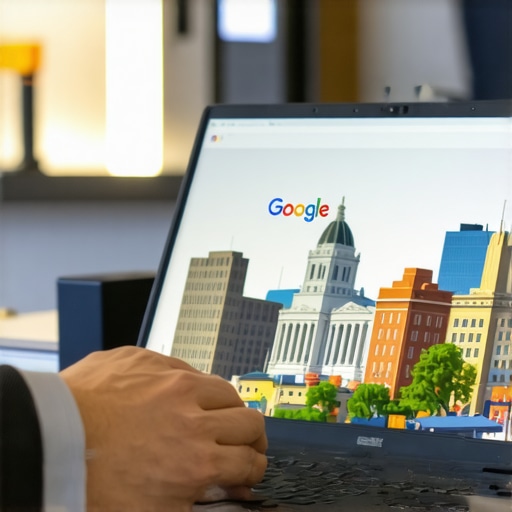 with a vibrant storefront image to illustrate this step.
Gather, Manage, and Respond to Reviews Strategically
Reviews influence rankings and customer trust. Encourage satisfied customers to leave genuine reviews, then respond promptly and professionally—addressing concerns, thanking loyal clients, and engaging authentically. I learned this firsthand when responding to a negative review turned into a positive sale, strengthening business reputation. Avoid fake reviews at all costs; they can cause penalties and damage credibility. Read more on how to remove fake reviews.
Leverage Local Keywords and Service Areas Precisely
Incorporate geo-specific keywords naturally into your profile description, posts, and services. For Louisville businesses, phrases like “Louisville plumbing services” or “Kentucky bakery near Iroquois Park” help Google connect your profile to local searches. Additionally, specify your service areas explicitly, ensuring your business appears in relevant neighborhoods and communities. During my own research, I found that defining broader, yet specific, service areas increased visibility in surrounding zip codes without diluting relevance.
Build Local Citations and Backlinks Effectively
Get listed on reputable local directories and partner sites. Ensure your business details are accurate everywhere to reinforce legitimacy. Backlinks from local news outlets or community blogs boost authority. I personally reached out to Louisville community sites, offering sponsorship or guest posts, which resulted in valuable backlinks. Focus on quality over quantity; a few high-authority citations outperform dozens of low-value ones.
Monitor Performance and Adjust Tactics Regularly
Use tools like Google Search Console and insights from your GMB dashboard to track traffic, calls, and map impressions. Set specific KPIs, such as increasing calls or reducing bounce rates. Regularly audit your listings for outdated info, broken links, or poor reviews. When I noticed a decline after a local event, I quickly updated my profile and responded to new reviews—recapturing lost visibility and engagement.
Implementing these steps consistently transforms your local SEO from a shot in the dark to a precise, measurable process. For advanced tips, explore maps optimization techniques or learn how to outsmart competitors with smart Louisville SEO strategies.
}**}**{Many local business owners in Louisville believe that simply claiming and optimizing their Google My Business profile is sufficient for ranking well on maps. However, the reality is more nuanced. One common misconception is that keyword stuffing or over-optimizing categories guarantees higher visibility. In truth, Google’s algorithms have become sophisticated enough to detect manipulative tactics, which can lead to penalties instead of better rankings. Instead, focus on providing genuine, locally relevant information that matches what your potential customers are searching for.
Another frequently overlooked mistake is neglecting the importance of local user engagement signals. While many rely solely on on-page optimizations, metrics like click-through rates, review responses, and local social interactions play a crucial role in boosting your map rankings. Ignoring these can be a costly error, especially as AI-driven local search systems increasingly prioritize authentic engagement.
Are you aware of how your reviews impact visibility? Fake or suppressed reviews not only harm trust but can also trigger algorithmic penalties, knocking your profile out of the local pack entirely. Learn more about the dangers of fake reviews and how to handle them in this guide. Moreover, many entrepreneurs miss the importance of consistent NAP (Name, Address, Phone Number) data across all platforms. While this seems basic, discrepancies here are a subtle but powerful way to undermine local rankings.
But perhaps the most insidious mistake is relying on outdated or generic SEO tactics that were effective a few years ago. Google’s recent updates, especially in 2026, emphasize local relevance, AI-driven signals, and real-world engagement over mere keyword prevalence. Staying updated with these changes is vital. For a comprehensive strategy, explore advanced maps optimization techniques tailored for Louisville’s unique market.
By understanding these nuanced factors and avoiding common traps, you position your Louisville business for sustained map visibility and increased customer calls. Ready to elevate your local SEO game? Reach out through our contact page and let’s craft your winning strategy. Remember, in local search, attention to detail separates winners from the rest. Have you ever fallen into this trap? Let me know in the comments.Maintaining top rankings on Google Maps and ensuring your Louisville or Kentucky business stays visible requires more than just initial setup—it’s an ongoing process that benefits from the right tools and methods. Personally, I rely heavily on advanced software to track performance metrics, manage reviews, and optimize local signals effectively. One tool I swear by is BrightLocal’s Local Search Rank Checker, which provides real-time updates on how your map listing ranks across different locations and keywords. This allows me to identify fluctuations early, adjust strategies promptly, and keep my clients ahead of AI-driven algorithm changes. Additionally, I use Google Maps Insights integrated with GMB to monitor how customers interact with profiles, such as clicks, calls, and direction requests. This data is invaluable because it helps tailor content updates and review strategies, directly impacting rankings.
How do I maintain map rankings over time? This involves a mix of diligent review management, NAP consistency, and strategic updates driven by analytics. I also recommend leveraging tools like Moz Local and SEMrush’s Listing Management to continually audit your citations, identify inconsistencies, and gauge competitor movements. Regularly auditing your profiles—checking for fake reviews or outdated info—prevents unseen penalties or drops in visibility. Importantly, staying current with [Google’s Maps ranking signals](https://developers.google.com/maps/documentation/places/web-service/overview) ensures your tactics align with evolving algorithms. Looking ahead, I predict that AI-powered local search systems will increasingly prioritize real-world engagement metrics, so investing in customer review strategies and local content will be crucial for long-term success.What I Wish I Knew Before Diving Into Local Maps Optimization
One of the most eye-opening lessons I learned was that claiming your Google My Business profile isn’t a one-and-done task. Continuous engagement, regular updates, and active review management are what truly boost visibility. I once underestimated the power of local-specific images, which made my profile more trustworthy and clickable. These small nuances can make a significant difference in your rankings and customer trust.
Another deep insight was how crucial consistency in NAP data is across all platforms. I initially thought a few discrepancies wouldn’t matter—boy, was I mistaken. Ensuring every mention of your business matches perfectly across directories, website, and social media signals reliability to Google, directly impacting your local pack rankings. It’s about building and maintaining reputation every single day.
Lastly, I realized that genuine customer engagement through reviews and responses can propel your business forward. Ignoring this aspect is like ignoring the heartbeat of local search. When I started replying to reviews, both positive and negative, I saw immediate improvements in local visibility and customer trust. It’s more than just a reputation tool; it’s a strategic signal to Google that your business is active and valued by the community.
About Me

Chesung Subba
Author/Writer
Hello, I'm Chesung Subba, a passionate writer who loves sharing ideas, stories, and experiences to inspire, inform, and connect with readers through meaningful content.
Follow Me
Connect with me and be part of my social media community.
Leave a Reply