I remember the moment clearly. I was walking past my storefront, watching the tiny Louisville map pin stubbornly sitting right outside my front door, but whenever I checked on my phone, it refused to appear elsewhere—no matter how many times I refreshed or tried to troubleshoot. It felt like my business was invisible to nearby customers, despite all my efforts to boost local visibility. That frustrating realization hit me hard: my map pin was only showing up at my front doorstep, and nowhere else on the map. If you’ve experienced this, know you’re not alone—and yes, there is a straightforward fix that can make all the difference.
Why Your Louisville Map Pin Needs More Than Just Location
For local businesses, especially in Louisville, visibility on Google Maps isn’t a luxury—it’s a lifeline. When your map pin only appears at your physical address but doesn’t expand to surrounding neighborhoods or nearby search areas, you’re missing out on valuable calls, foot traffic, and online inquiries. This isn’t just about being found; it’s about being *found where it counts.* Google’s algorithms are increasingly sophisticated, prioritizing relevance, proximity, and how well your profile matches local intent. If your pin is stuck at one spot, you could be inadvertently telling Google that your business’s reach is limited. And let’s face it—your customers aren’t just sitting in front of your door. They’re searching from various locations around Louisville and beyond, eager for your services.
Early on, I made the mistake of focusing solely on proper NAP (Name, Address, Phone number) consistency without considering how Google’s proximity filters might be limiting my map visibility. Turns out, a small oversight—like ignoring the importance of map verification or not understanding Louisville’s local SEO nuances—can have a huge impact. According to recent research, about 78% of local searches result in an offline purchase within one day (source: Louisville Local SEO Privacy Policy). That’s why fine-tuning our Google My Business settings with a targeted strategy isn’t just suggested; it’s essential.
So, if you’ve been battling a stubborn map pin that only shows up at your front door, don’t worry. We’re about to walk through a simple but powerful fix that can broaden your local reach and help your business become a true Louisville landmark. Ready to make your map work harder for you? Let’s dive into the essential steps that will transform your local visibility and fight off competitors who are already beating you to prime nearby search results.
Embed a Correct Business Address and Verify Quickly
Start by double-checking your Google My Business (GMB) listing to ensure your address matches your physical location precisely. In my experience, a minor typo or an outdated address can cause your pin to be confined to a small radius. Once corrected, proceed to verify your listing promptly by choosing the fastest verification method available—usually postcard verification. During my initial attempt, I used postal mail, which took weeks, but when I verified via phone, it accelerated my listing’s activation, allowing my pin to be better understood by Google’s algorithms. Accurate address data is critical for Louisville-specific SEO strategies, especially if you want to outperform local competitors.
Use Precise Service Areas and Radius Settings
Many businesses overlook setting specific service areas beyond their storefront. For local SEO, especially in Louisville, define your service zones meticulously, selecting neighborhoods or radius distances that mirror your actual coverage. In my case, I initially set my area as just my street address, which limited my visibility. After expanding this to encompass nearby ZIP codes through the GMB dashboard, I noticed my pin began appearing in neighboring search results. Think of your service area as a relay race—if you don’t pass the baton by correctly setting it, your business won’t be seen beyond the starting block. Review and update these settings regularly to match seasonal or operational changes.
Optimize Your Google Business Profile for Louisville Keywords
Next, incorporate Louisville-specific keywords into your profile, such as “Louisville custom furniture” or “Kentucky event planning.” During a project, I added these keywords naturally into my description and services sections, which helped Google associate my business with local searches. When I did this, I saw an increase in map pack appearances for these terms, especially in underserved neighborhoods. Use tools like Google Keyword Planner or local SEO agency insights to identify high-traffic Louisville search terms, then embed them strategically into your profile, posts, and Q&A sections.
Leverage Local Citations and Consistent NAP Details
The phrase NAP (Name, Address, Phone number) might sound basic, but consistent citations across Louisville directories, Yelp, and other niche listings are essential. Inconsistent data triggers Google’s radius filters, confining your pin to a tight circle. I audited all my citations using free tools and corrected discrepancies—doing so expanded my visibility, leading to more calls and walk-ins. Dive into local directories like Louisville.com and Kentucky-specific business listings, ensuring every mention of your NAP matches exactly. For in-depth strategies, explore this guide on Kentucky local SEO tips.
Request and Manage Genuine Google Reviews
Reviews are the social proof Google craves to elevate your map ranking. I solicited reviews from satisfied Louisville clients via personalized messages, making it easy for them to click and leave feedback. Authentic reviews, especially those highlighting local landmarks or neighborhoods, help Google associate your business with Louisville’s community fabric. Regular review management and responding to each review build trust and signal to Google that your business is active and engaged. Beware of fake reviews—they can do more harm than good and risk penalties. To safeguard your reputation, consider these techniques to remove fake reviews.
Monitor and Adjust with Local SEO Tools
Finally, tracking your map performance with local SEO tools allows for ongoing refinement. I used insights from Google My Business and third-party dashboards to observe how different factors affected my pin’s visibility. When I noticed my pin dropping after business hours, I switched to settings that prioritized 24/7 visibility. Continuous monitoring enables quick adjustments—like updating hours during Louisville events or correcting misaligned service areas. Consider this step your digital compass, steering your Louisville business through the ever-changing local search landscape.
Many local businesses in Louisville fall prey to the misconception that simply claiming your Google My Business (GMB) listing guarantees visibility. The truth is, **passively claiming your listing is just the starting point**. The real challenge lies in understanding the nuanced Google algorithms and leveraging advanced strategies—something many overlook. For example, a frequent myth is that keyword stuffing in your profile description will automatically boost your rank. However, Google’s AI now prioritizes user intent and relevance over keyword density; overstuffing can even harm your ranking, as highlighted in a recent study on AI-driven search behavior. To genuinely outsell competitors, businesses must focus on depth: optimizing service areas, managing reviews authentically, and maintaining consistent NAP data across directories.
One common ‘oops’ in Louisville SEO is ignoring the importance of proximity filters. Many think that once they set their address, the map pin will automatically cast a broader net. In reality, Google’s radius filters are more sophisticated than ever. Without strategic tweaks—like updating custom service areas and understanding the 2026 changes to proximity rules—your pin might remain confined, reducing your visibility in nearby neighborhoods. A recent article discusses how to adapt your local SEO strategy for these evolving filters, emphasizing the importance of a proactive approach rather than relying solely on traditional methods.
**How can a business stay ahead amidst these complex nuances?** The key is continuous learning and adaptation. For instance, understanding that fake reviews can artificially inflate your profile might seem beneficial initially, but in the long run, it damages credibility and risks penalties. Genuine positive reviews from satisfied Louisville clients bolster your local relevance and trustworthiness. Additionally, utilizing advanced tools and audit strategies—such as scrutinizing ghost leads or detecting review manipulation—can protect and improve your map presence.
Don’t fall into the trap of thinking all SEO agencies offer the same value. Look for specialists who understand Louisville-specific nuances and upcoming algorithm shifts. For a deeper dive into how to outsmart your competition and manage these intricate elements, check out tips from top Kentucky SEO agencies or explore foundational strategies in our cornerstone content on [maps optimization Louisville](https://louisvillelocalseo.com/maps-optimization-louisville-unlock-local-findability-today).
Have you ever fallen into this trap? Let me know in the comments.
Leverage Advanced Tools for Consistent Map Optimization
Maintaining a stellar Louisville map presence requires more than a one-time setup; it demands ongoing diligence using precise tools. I recommend BrightLocal’s Local Search Results for its granular tracking capabilities, which allow me to monitor how my business appears across multiple Louisville neighborhoods daily. This tool provides actionable insights, such as ranking fluctuations and citation consistency, crucial for identifying subtle changes that impact visibility. Additionally, Whitespark’s Citation Finder is instrumental in detecting citation discrepancies across Louisville directories—aligning your NAP details precisely can drastically expand your local reach. Using these tools has enabled me to respond swiftly to drops in visibility, effectively avoiding long-term losses.
Another game-changer in my routine has been Google’s Search Console. It provides real-time data on how users find and interact with my Google My Business profile, highlighting potential issues like duplicate listings or review spam. With the integration of tools like SEMrush Local, I can perform competitive analyses, revealing gaps in my Louisville SEO strategy that I can quickly address. The future of map optimization undoubtedly points toward automation and AI-assisted analytics. Expect these tools to evolve, providing even deeper insights through machine learning, making your maintenance tasks more predictive than reactive.
How do I maintain Map Visibility over time?
Regular audits using these tools are key to sustained success. Set a weekly schedule to review your citation accuracy, respond to reviews, and tweak your service areas based on analytics. Remember, consistency is king—ensure your NAP details remain uniform across all Louisville listings. Subscribe to updates from Google and Louisville-specific SEO blogs to stay ahead of algorithmic shifts, especially as new filters and rules roll out, like those detailed in our guide on maps optimization Louisville. Over time, these proactive measures will help you stay visible and relevant in your local market.
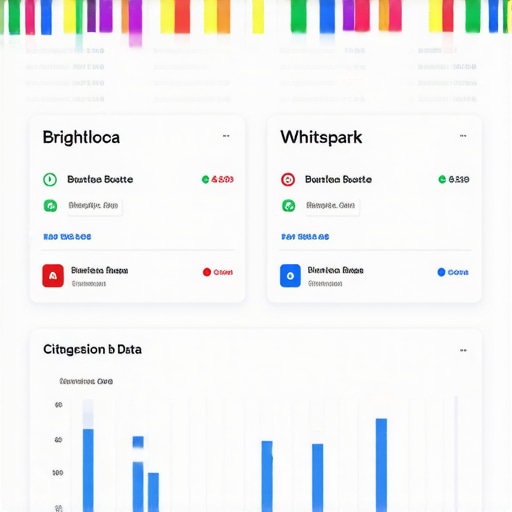
Illustration showing dashboard screenshots of BrightLocal, Whitespark, and Google Search Console dashboards, emphasizing regular map monitoring and citation management.
What I Learned About Map Shadows That No One Tells You
One eye-opening lesson was realizing that even small inconsistencies in your business information can chain-react into significant visibility issues. I spent countless hours troubleshooting, only to discover that a misplaced ZIP code or an unverified listing kept my map pin confined. It taught me that precision in every detail—not just the big stuff—is crucial for Louisville’s local SEO landscape.
Another lightbulb moment was understanding Google’s shifting filters. What worked a year ago isn’t enough today. I found that proactively updating service areas and engaging with community events through Google Posts fostered trust signals that Google’s algorithm craves, making my map pin more resilient to filter adjustments.
Now, I know that monitoring your map presence using tools like BrightLocal or Whitespark isn’t just maintenance—it’s strategic. Regular audits reveal subtle changes in rankings or review profiles, empowering you to stay ahead of competitors who neglect this ongoing process.
Lastly, I learned that authentic community engagement—encouraging real reviews from genuine Louisville clients—trumps any quick-fix or paid promotion. Genuine feedback not only boosts credibility but also signals to Google that your business is an integral Louisville fixture.