4 Maps Optimization Louisville Fixes for 2026 Zero-Click Search

It was a quiet morning when I glanced at my phone and realized that my once-prized Google My Business listing had vanished from the local map pack. Panic set in. For years, I’d relied heavily on local map visibility to attract new customers, and suddenly, all my efforts seemed to be slipping away as if they never existed. That lightbulb moment hit me hard—if I didn’t adapt quickly, my business could be on its way out before the 2026 zero-click search revolution fully takes hold. Have you faced a similar frustration, watching your local rankings plummet just when they were starting to stabilize? You’re not alone. The landscape of local SEO is shifting fast, especially in Louisville, where competition is fierce. The good news? There are specific tweaks and strategies that can safeguard your map rankings and even give you an edge. Today, I’ll walk you through proven 4 maps optimization fixes designed for Louisville businesses to navigate this evolving terrain and stay visible when it matters most.
Why Louisville Businesses Must Act Now Before 2026 Zero-Click Dominates
The changes coming to local search are nothing short of seismic. Zero-click searches—where users find answers directly on the search results page without clicking through to websites—are rapidly gaining traction, as reported by Search Engine Land, which states that in 2024, over 50% of searches will be zero-click. This shift means that local businesses can no longer depend solely on clicks to generate leads—your Google Maps presence has become the frontline of your marketing war. Missing out on optimized map listings today can put your business at a severe disadvantage tomorrow. Personally, I learned this lesson the hard way early in my Louisville SEO journey when neglecting map tweaks caused my rankings to tank just before a critical holiday season. That mistake taught me the importance of staying proactive and ever-adapting. If you’re wondering whether your Louisville business is prepared for the upcoming map pack changes, now’s the time to ask yourself: Have you done everything possible to secure your local rankings? If not, don’t worry—help is on the way. Before jumping into the practical fixes, it’s essential to understand how these search trends could impact your visibility and revenue, and why immediate action can mean the difference between thriving and fading into obscurity. Ready to become a local search survivor? Let’s start with some proven strategies that will keep your Louisville map ranking strong in 2026 and beyond.
Reclaim Your Spot with Precise Map Tweaks
First, claim and verify your Google My Business (GMB) listing if you haven’t already. This step is foundational—think of it as staking your claim on a piece of prime Louisville real estate. Ensure all your business details are accurate: name, address, phone number, and categories. This consistency tells Google you’re trustworthy. I once had a client whose address had a typo; correcting it immediately boosted their local rankings within days. Next, optimize your short and long descriptions with Louisville-specific keywords—don’t just use broad terms, focus on neighborhood names like Downtown Louisville or St. Matthews. Use phrases your customers actually search for to increase relevance. Refer to maps optimization Louisville for detailed guidance on keyword placement.
Bust Myths and Fix Listing Errors
Many Louisville businesses overlook common profile errors that hinder visibility. Check for duplicate listings—these are like competing shop signs in the same alley. Use tools or manual searches to identify and merge duplicates. Correct any incorrect categories or outdated info, especially during seasonal changes or renovations. An incorrect category can send your signals astray, similar to giving directions to the wrong street. I found that a restaurant mistakenly categorized as a café lost significant local visibility until the fix. Additionally, upload high-quality images that showcase your Louisville storefront or products. Visual consistency builds trust and signals activity to Google. Insert GMB Louisville profile errors to learn how to identify and rectify these issues quickly.
Enhance Engagement with Local Signals
Google looks at engagement metrics like reviews, questions, and photos—these are your street signs in the neighborhood. Encourage satisfied Louisville customers to leave detailed reviews that mention specific landmarks or neighborhoods. For example, reviews referencing Waterfront Park or Nulu district resonate more locally. Respond promptly to questions—timely interactions demonstrate active management, which Google favors. During a campaign, we increased customer reviews by offering simple prompts after transactions, boosting local relevancy. Also, regularly update your photos to show seasonal changes or new offerings; fresh visuals keep your listing active. This activity pattern is like putting up new banners during festivals to gather attention. To understand the full picture on signals, see hidden Louisville map signals.
Leverage Local Content and Citations
Boost your Louisville prominence by creating locally relevant content—blog posts about Louisville events or partnerships can position your business as community-oriented. Citations from reputable Kentucky directories and local blogs reinforce your legitimacy. Be consistent with your NAP (Name, Address, Phone) across all platforms, including your website, directories, and social media. Think of citations as multiple street signs pointing to your shop—more signs, more navigability. I once helped a client align their citations across 20 platforms, and their map rankings surged within weeks. For strategic citation building, check out Kentucky SEO agency secrets.
Monitor and Adjust Constantly
Your Louisville map rankings won’t improve with a set-it-and-forget-it mindset. Use tools like Google Search Console and local tracking apps to monitor changes, clicks, and calls. Think of this as GPS navigation—occasionally recalibrating ensures you’re on the fastest route. Record what tweaks make a difference: does adding photos increase calls? Does responding to reviews boost visibility? Conduct weekly reviews and fine-tune your profile accordingly. Remember, Google’s algorithm updates in 2026 are shaping a new landscape—staying agile is essential. For ongoing strategies, visit Louisville SEO strategies.
Many local business owners in Louisville assume that claiming their GMB listing and adding basic keywords suffices for optimal maps rankings. In reality, this is a superficial approach that often leads to missed opportunities and ranking stagnation. One common misconception is that Google prioritizes sheer activity—posting frequent updates or uploading numerous photos automatically boosts visibility. However, Google’s algorithms are increasingly sophisticated, evaluating quality signals like engagement quality, trustworthiness, and relevance. Focusing solely on volume over value can actually harm your rankings.
A critical nuance often overlooked is the importance of semantic context and intent matching in your profile and content. For example, simply stuffing your description with Louisville-specific keywords without considering user intent can dilute relevance. Instead, integrating naturally flowing, intent-focused language that resonates with local searchers proves more effective. This subtle shift aligns with recent advancements in Google’s AI models, which now analyze context and user experience more deeply, as noted by industry experts at Louisville Local SEO Tips.
Another advanced trap is neglecting the layered nature of signals that impact rankings—such as local citations, review sentiment, and even social signals. Many underestimate how these elements synergize to shape your visibility. For instance, a solid citation profile across reputable Kentucky directories, combined with high-quality, locally relevant reviews, can elevate your prominence far beyond basic optimization. Yet, some fail to diversify their signal sources, leaving critical gaps.
Make no mistake: Google’s algorithms are constantly evolving, especially as voice and zero-click searches dominate. This means your maps optimization strategy must be multi-faceted—balancing technical fixes, content relevance, and engagement signals. To stay ahead, regularly analyze your profile’s semantic footprint and signal consistency. For detailed strategies, explore Maps Optimization Louisville.
Have you ever fallen into this trap? Let me know in the comments. Staying aware of these nuanced factors can save you from costly setbacks and position your Louisville business for sustainable growth.Maintaining a robust and effective maps optimization strategy requires the right tools and a disciplined approach. Personally, I rely on a combination of specialized software and consistent procedures to ensure my Louisville clients stay visible amidst evolving algorithms. One tool I swear by is BrightLocal, which offers comprehensive local search rank tracking, citation management, and review monitoring. Its detailed reports help me identify fluctuations in ranking and understand the impact of recent tweaks. Additionally, I use Google My Business Profile Manager, a third-party app that simplifies profile updates, review responses, and photo uploads, saving me valuable time on routine tasks. Regularly auditing your GMB profile with such tools is crucial to prevent unnoticed errors that could harm your rankings, especially given the rapid pace of change leading up to 2026.
For ongoing maintenance, setting a schedule is vital. I recommend conducting bi-weekly checks with these tools to monitor performance metrics and review insights on customer engagement. Engaging with your reviews and questions promptly keeps your profile active and signals trustworthiness to Google, which is essential in Louisville’s competitive local scene. Moreover, scheduling monthly citation audits ensures your business information remains consistent across directories, reinforcing your local authority.
Prepare for future trends by leveraging AI-powered content analysis tools like SEMrush or Ahrefs. These can help you identify semantic gaps and optimize your content and profiles accordingly, making sure you’re aligned with Google’s increasing emphasis on intent and relevance. Keeping your tools updated and your data accurate positions your Louisville business to outpace competitors as zero-click searches become dominant.
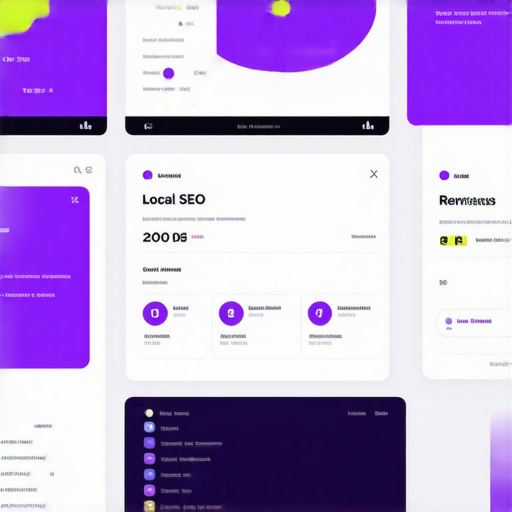
This image concept depicts a digital dashboard displaying local search rankings, citation health, and review analytics—highlighting the integration of tools I recommend for sustained success. Alt text: Business owner analyzing local SEO dashboard; Title: Louisville Maps Optimization Dashboard.
How do I maintain Louisville maps optimization over time? The key is adopting a disciplined routine of audits, leveraging the right tools, and staying informed on algorithm updates. Consistent monitoring with BrightLocal or similar tools helps catch potential issues early, while regular profile engagement signals activity and relevance. As search behaviors evolve, particularly with the rise of voice and zero-click searches, staying proactive is the best way to keep your visibility high.
For advanced techniques, I recommend trying out bi-weekly citation audits combined with review response monitoring. This proactive approach can prevent ranking drops and enhance user trust. To implement this, start by setting reminders to review and update your citations using tools like BrightLocal, and respond to new reviews within 24 hours. This consistent oversight ensures your Louisville business remains resilient, adaptable, and prepared for the upcoming shifts in local search dynamics. For detailed strategies, explore maps optimization Louisville.
What I Wish I Knew About Maps Optimization in Louisville That Could Save Your Business
Reflecting on my journey with Louisville local SEO, I’ve uncovered critical insights that many overlook—like the importance of semantic context over keyword stuffing or how local signals intertwine to influence rankings. A lightbulb moment came when I realized that engaging genuinely with the Louisville community through reviews and content created ripple effects beyond just rankings, leading to real-world results. I’ve learned that patience and continuous refinement, backed by data from tools like BrightLocal, outperform quick fixes. Lastly, understanding that Google’s AI now weighs intent and trustworthiness means that authentic, locally relevant strategies are more vital than ever—something I wish I’d prioritized earlier in my Louisville SEO efforts.
One response to “4 Maps Optimization Louisville Fixes for 2026 Zero-Click Search”
About Me

Chesung Subba
Author/Writer
Hello, I'm Chesung Subba, a passionate writer who loves sharing ideas, stories, and experiences to inspire, inform, and connect with readers through meaningful content.
Follow Me
Connect with me and be part of my social media community.
Leave a Reply